


Test Owner

A coalition of epilepsy charities and organisations have developed a new toolkit to enhance social support for individuals with epilepsy. Funded by the Scottish government, this toolkit aims to improve the quality of life for people diagnosed with epilepsy by expanding social support services across the UK.
Epilepsy, a common and serious neurological condition, affects around 626,000 people in the UK. It is prevalent among individuals with learning disabilities, with about a third experiencing frequent seizures. People with epilepsy often face co-morbidities such as high cholesterol, type 1 diabetes, osteoporosis, and migraines. Mental health issues, sleep difficulties, and cognitive impairments are also more common in this group.
Those with epilepsy often struggle to find and maintain employment, with higher incidence rates in deprived areas. Social support significantly enhances the quality of life and wellbeing for people with epilepsy. This support includes resources, knowledge, and skill development to help individuals manage their condition effectively. Key types of social support include peer support meetings, epilepsy self-management courses, one-to-one support, and counselling services.
Jason Leitch, National Clinical Director of The Scottish Government, emphasised the importance of a supportive environment combined with appropriate clinical care to improve outcomes for people with epilepsy. He stated that the toolkit provides guidance for health leaders on commissioning essential social support services, promoting a holistic approach to epilepsy care and encouraging collaboration between Health Boards, Local Authorities, and third-sector providers.

NHS England, in collaboration with the government, has launched a new ADHD Taskforce to improve access to services and manage rising demand for ADHD support. Co-chaired by Professor Anita Thapar and Joanna Killian, the taskforce will focus on enhancing ADHD pathways, patient experiences, and recommending reforms.
Joanna Killian, Chief Executive of the Local Government Association, highlighted the varied impact of ADHD on daily life and the increasing need for support. She stressed the collaborative role of councils in providing care to children and adults with ADHD, working with housing, health, education, and voluntary sector partners. The taskforce aims to ensure services meet the needs of people with ADHD of all ages.
Since December, NHS England has focused on ADHD with senior clinicians and system leaders to develop a national ADHD data improvement plan, understand the provider landscape, and share best practices from innovative local health systems.
Steve Russell, Chief Delivery Officer at NHS England, acknowledged the need for timely diagnosis and comprehensive care for people with ADHD. He believes that Anita and Joanna's expertise, supported by the NHS, will be crucial in driving improvements in ADHD care and support.
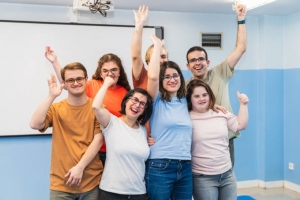
Kyle Wood, a man with Down's Syndrome, moved from South Africa to the UK in 2019, seeking better job opportunities. Since September, he has been working at a diner in Faringdon, Oxfordshire. While only 4.8% of adults with learning disabilities and autism are employed in the UK, this is still higher than South Africa’s 1% rate for disabled individuals. Kyle's job has provided him with new skills and a sense of community.
Kyle trained for 18 months with Yellow Submarine, an Oxfordshire-based charity that supports disabled individuals in finding employment. After graduating, the charity helped him secure a job and continues to provide support. The charity emphasises helping trainees maintain long-term employment through simple workplace adaptations.
Rachael Blakey, Yellow Submarine’s adults’ programmes manager, mentioned employers' concerns about costs and adjusting. To address these issues, the government launched the Disability Confident Scheme in 2016 to encourage businesses to hire and retain disabled employees. Currently, 19,638 UK employers are signed up to the initiative.
A Department for Work and Pensions spokesperson stated that the Disability Confident Scheme aims to challenge perceptions and support businesses in hiring disabled individuals. An independent 2022 survey found that about two-thirds of employers had hired a disabled employee since joining the scheme, and more than four in five offered workplace adjustments.
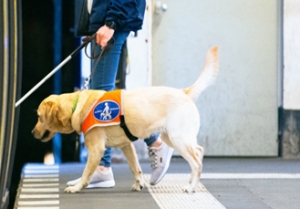
An autistic girl from Derby, who often ran away and put herself in danger, has had her life transformed by an assistance dog. Eight-year-old Alessa, diagnosed with autism age five, frequently bolted from her family. After a close call where she was hit by a car, her parents sought additional support.
"If there was an open door, she'd be gone—she was constantly on the go," said Donna, Alessa’s mother and Clinical Support Worker. "She ran across the road to see her grandad's van and was hit by a car. Thankfully, the driver braked just in time, but it was a close call that left us all shaken."
Mandy, a Labrador-Golden Retriever, trained by the National Charity of Support Dogs, has dramatically improved Alessa's behaviour. Research by Autism Speaks indicates nearly half of autistic children are prone to bolting or wandering. Since Mandy joined their family, Alessa has almost stopped running away. "When Alessa is upset, Mandy just sits with her, and she calms down. Mandy is her rock," Donna noted. "Before, she would throw things, scream, shout, and kick."
During lockdown in 2021, Donna applied for an assistance dog, and within a year, a match was found. When Mandy met Alessa, their connection was immediate. "As soon as Mandy sat with her, Alessa just chilled. It was amazing to watch." Mandy has not only brought calm to Alessa but also brought the family closer together.

A new report from Newlife (a charity for Disabled Children) reveals that the basic needs of disabled children are not being met, with three in five families unable to access essential specialised equipment. Waiting times are rising, with nearly one in four local authorities having waitlists of at least a year, some extending beyond three years.
Specialised equipment is crucial for the 1.6 million disabled children in the UK, a number that has doubled in the past decade. Both families and professionals are concerned about inadequate provision, with 75% of professionals blaming funding and staff shortages for the delays.
Regions like the Northwest of England face the longest waits, exceeding three years in some cases, followed by Northern Ireland, Wales, and London. The report identifies key barriers: long assessment waits, insufficient budgets, lack of government leadership, and staff shortages.
Newlife has called for a dedicated Minister for Disabled Children to address these issues by accelerating equipment provision, reducing assessment waits, and tackling staff shortages. The charity has also urged for clearer guidance for local services, expansion of the paediatric apprenticeship programme, improved staff retention and training, maximum wait times for assessments, and a ringfenced budget for equipment.
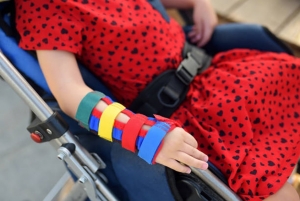
An eight-year-old girl from Cheshire, named Hayley, has made medical history as the first child to undergo a groundbreaking brain surgery designed to alleviate symptoms of her Dystonic Cerebral Palsy. Dystonia, a chronic neurological disorder, triggers involuntary and often painful muscle spasms.
In January, a team at Alder Hey Children's Hospital in Liverpool conducted an advanced deep brain stimulation (DBS) procedure involving the placement of minute electrodes, as tiny as a grain of rice, into Hayley's brain region controlling movement. These electrodes are linked to a battery implanted under the skin, which sends electrical pulses to modify the problematic signals causing dystonia. This innovative surgery is aimed at reducing Hayley's pain and improving her communication abilities.
The electrodes also collect real-time data on brain activity, allowing surgeons to adjust stimulation settings for optimal results, a feature enhanced by the new BrainSense technology from Medtronic. Consultant Neurosurgeon Jonathan Ellenbogen highlighted the importance of this capability, especially for non-verbal patients like Hayley, in customising treatments.
Hayley, born prematurely at 24 weeks, has severe communication challenges due to her uncontrollable movements. Her father, Gareth, expressed the difficulties in understanding her needs, noting that traditional communication methods like Makaton or Sign Language are not viable. They hope the surgery will enable better head control, allowing Hayley to use eye-tracking technology for communication.

The Newcastle Rugby Foundation has introduced a new rugby programme designed for individuals with learning disabilities. This initiative, established in collaboration with Wooden Spoon Durham and Wooden Spoon Northumberland, kicked off this week at Kingston Park Stadium. It includes specialised rugby sessions that cater to the unique needs of its participants.
The programme, which is inclusive and open to participants of all skill levels, seeks to make rugby accessible to more people, particularly those with additional needs. It's part of a broader effort to enhance community involvement and provide a sense of inclusion and empowerment among participants and their families.
The sessions are designed to not only improve physical fitness but also to build teamwork and enhance skills, with opportunities for participants to compete in national matches against other learning disability teams.
Iain Stewart, the chair of Wooden Spoon Northumberland, expressed enthusiasm for the initiative. "We are thrilled to back the Newcastle Rugby Foundation's Learning Disability programme. It aligns perfectly with our National Game Changer campaign, which is dedicated to offering young people with disabilities the opportunity to engage in rugby," he stated.
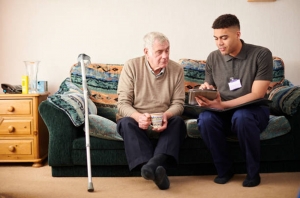
Mental health social workers from Cumberland Council's urgent care team are planning a two-week strike starting April 24th to protest their job grading. This team, crucial for conducting mental health assessments and making detention decisions under the Mental Health Act, has previously engaged in 48-hour and 72-hour strikes in March.
A GMB union representative emphasised the team's critical expertise and dedication. In response to the upcoming strike, the council assured that "emergency cover" will be in place, collaborating with the NHS to maintain necessary support for residents.
The strike is scheduled to begin at 09:00 GMT on April 24th and conclude at 09:00 GMT on May 8th. Fran Robson, a GMB organiser, expressed the necessity for the council to acknowledge the workers' value and consider a fair re-evaluation of their roles. The escalation comes after the workers felt compelled by the lack of action on their grading issues.
The workers' current annual salaries range from £48,474 to £49,498, according to council data. The council, led by Labour, mentioned that the role was last regraded in 2019, and a subsequent request in 2022 was denied due to the absence of "significant changes" in the job's scope.
The UK's first performing arts centre designed for autistic individuals with complex needs, spearheaded by Berkshire-based charity Prior’s Court, has surpassed the £1 million fundraising mark. Scheduled to open in the 2024/25 school year, the Let Me Shine Performing Arts Centre will feature adapted facilities for engaging autistic youth in music, dance, and drama.
Significant contributions have come from The Gosling Foundation, The Cadogan Charity, The Alchemy Foundation, The Gerald Palmer Eling Trust, and The Beatrice Laing Trust. Additional funds were raised through individual efforts including Mark Bailey of Prior’s Court completing a 24-hour cycling challenge, James Gordon and Evie Merry from Karcher UK participating in a half marathon and 10k run, and Zoe Brown from Charles Hunter Associates competing in a white-collar boxing event.
Fundraising Manager Natalie Norris expressed gratitude for the support that has enabled the project to reach this significant milestone, highlighting the transformational impact of the arts on autistic youth. The centre will not only simulate theatre environments but also include an outdoor performance space to aid those uncomfortable with indoor settings.
With £115,000 still needed, the funds will complete the outdoor area, facilitating a smoother entry into the performing arts. The project also aims to establish best practices in arts accessibility for autistic individuals, with plans to share these insights across educational and performing arts sectors nationally and internationally.

The Nuffield Trust has reported a significant surge in the need for autism assessments and ADHD treatments in England, surpassing the National Health Service's (NHS) ability to deliver timely care. Since 2019, there's been a fivefold increase in individuals awaiting autism specialist consultations and a 51% rise in ADHD medication prescriptions. This escalation in demand has led to extended waiting times and backlogs.
As it stands, about 25% of individuals referred for ADHD are enduring waits of up to two years for their initial assessment, a situation further exacerbated by widespread medication shortages. Similarly, the timeframe for autism assessments has seen a dramatic increase, with reports of waits extending beyond two years in certain areas.
The call for action extends beyond healthcare professionals to encompass a broader societal adjustment towards embracing neurodiversity. Leading charities are urging the creation of a cohesive strategy to offer improved early support for neurodivergent individuals.
In response, the Department of Health has unveiled plans to tackle these delays head-on, including the establishment of a new ADHD taskforce and the allocation of additional funds aimed at bolstering support for neurodiverse children within the educational system. These steps represent a critical acknowledgment of the need for both immediate and long-term solutions.